
From The Guardian (UK)
With concern over animal welfare, supermarkets and restaurants under fire and fears about ‘foreign ways’, halal meat is food’s most politically charged subject. But it’s now a £1bn a year market in the UK alone – and growing fast
by Carla Power
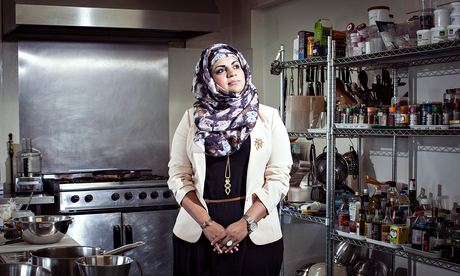
In the Cherwell valley, on a quiet country lane just outside Oxford, lies a pioneer outpost of Britain’s halal food industry. Beside the swells of green where the Cotswolds begin is Willowbrook Farm, where Lutfi and Ruby Radwan and their five children raise animals as the Qur’an and the prophet Muhammad intended. For the Radwans, that means organically and sustainably. Chickens strut under silver birch and wild cherry trees. Sheep and goats chew chemical-free grass, and nose around wildflower meadows. When it is time for slaughter, each animal will – in accordance with Islamic law – have the name of God pronounced over it before dispatch. Invoking Allah before killing an animal is simply “acknowledging a spirituality behind all material existence”, observes Ruby. “It takes you back to humans being stewards of God’s Earth.”
The Radwans, both London-raised, aren’t from farming stock. Lutfi started his career as a geography don at Oxford and a development consultant; Ruby was a teacher and alternative healer. In 2002, disenchanted with both urban academic life and the halal meat on offer, they bought 45 acres, planted thousands of saplings where there had been wheat stubble, and began raising sheep, goats and chickens. Today, they sell their produce online from a small farm shop, as well as offering open days, camping and concerts. On a recent afternoon during lambing season, a neighbouring farmer drops by to talk about plastering the thatched farmhouse the couple are building, while their home-schooled nine-year-old studies at the living-room table.
If Willowbrook Farm conjures up images of The Good Life and Constable paintings, the word “halal” is frequently freighted with controversy. Halal stories braid together two favourite tabloid scare stories: food safety and foreign ways. “Stop slashing animals’ throats in ‘ritual’ slaughters for halal and kosher meat, says new leader of Britain’s vets,” screamed a Mail Online headline, after the president-elect of the British Veterinary Association said in March that Jewish and Muslim slaughter methods were “inhumane”, and warned that a total ban might not be far off. David Cameron rushed to reassure Britain’s Muslims and Jews that their halal and shechita methods were safe under his government. Still, halal meat remains a charged issue, with English Defence League members fulminating about its availability in British schools and hospitals.
For animal welfare groups, including the RSPCA, the nub of the issue is stunning before slaughter, legally required under EU regulations for everyone but religious groups (though Sweden has long required stunning, regardless, and Denmark has recently passed similar regulation). Halal slaughter requires that an animal must be alive and healthy, and dispatched with a quick cut to the throat with a sharp knife, a method that allows the blood to drain from the carcass. Killing without rendering an animal unconscious is cruel, argue animal rights campaigners. Not so, argue Muslims, who point to studies showing that animal suffering is minimal with a skilled slaughterer.
In truth, 88% of Britain’s halal meat comes from animals that have been stunned before slaughter, but the 12% that isn’t generates controversy, even among Muslims. Of Britain’s two most prominent halal certification boards, the Halal Food Authority allows stunning, while the Halal Monitoring Committee bans it, on grounds that stuns can sometimes kill the animals before slaughter. With a clutch of regulatory bodies, and varying definitions of what constitutes halal, customers are confused: there have even been calls to have halal meat labelled as “stunned” and “non-stunned”. A report by beef and sheep industry organisation Eblexeven cites suggestions of having an Islamic religious scale, ranging from “Mandatory Acts” to “Forbidden Acts”.